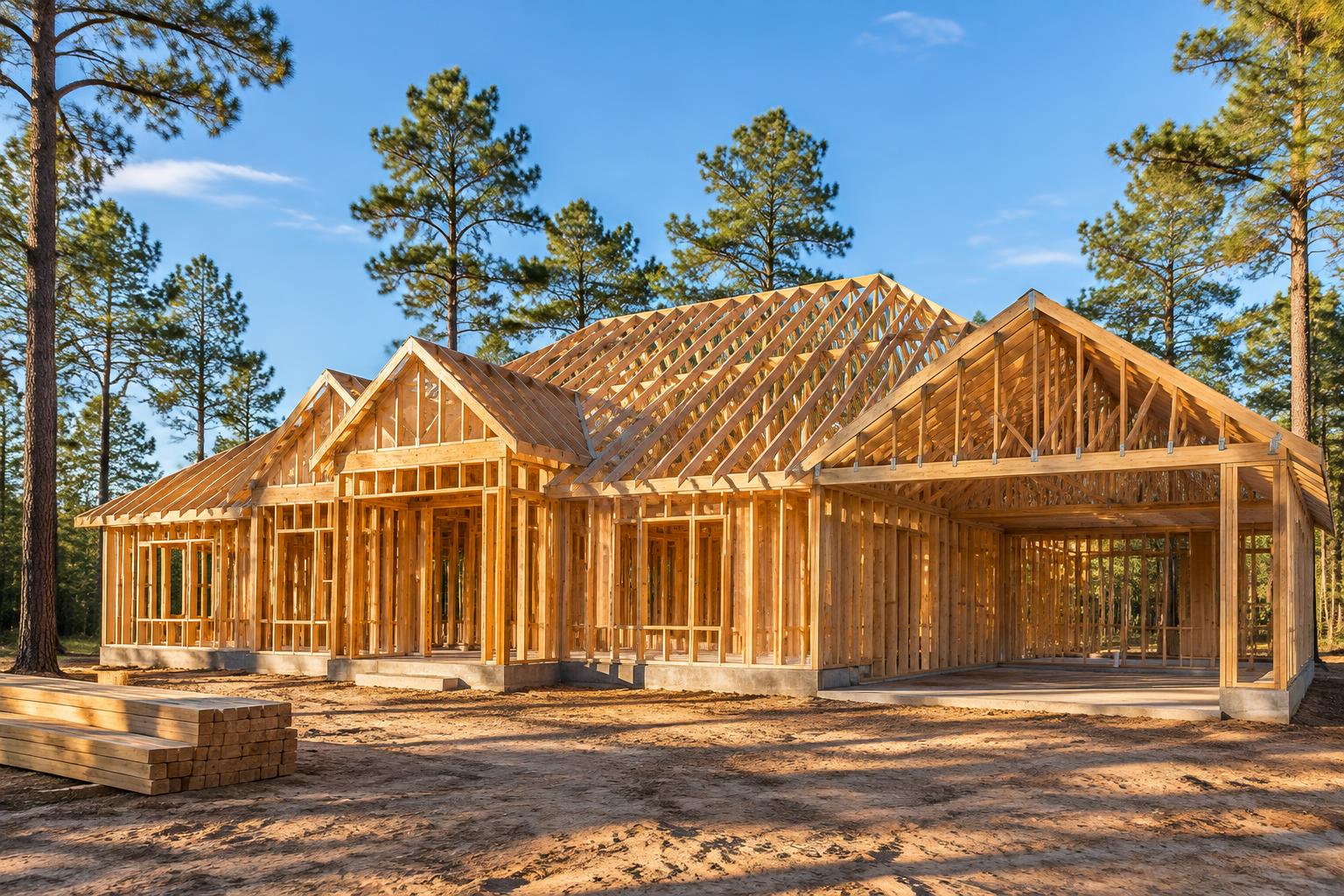
Building a custom home is one of the most rewarding projects a family can take on — and one of the biggest. The decisions you make before construction starts have the largest effect on cost, schedule and how much you love the finished home. Here is what we recommend thinking through first.
1. Know your land before you design
Whether you already own a lot or are still looking, find out:
- Survey and boundaries. Make sure you know exactly where the property lines and any easements are.
- Deed restrictions or HOA rules. Some neighborhoods set minimum square footage, materials or setbacks.
- Flood zone. Check the FEMA flood map for the property and look at how water moves across the lot after a heavy rain.
- Soil. Clay soils are common in parts of East Texas and can expand and shrink with moisture. A soil report helps your builder and engineer design the right foundation.
- Utilities. Is city water and sewer available, or will you need a well and a septic system? Septic systems require permitting and a site evaluation, which affects where the house can sit.
- Trees and access. Clearing, driveway placement and protecting the trees you want to keep all affect site-work costs.
2. Build a realistic budget
A complete budget includes more than the cost per square foot. Plan for land, site work, the home itself, finishes and fixtures, landscaping, driveways, utility connections, permits and fees, and a contingency for surprises. Ask your builder how allowances work for items like flooring, lighting and cabinets, so you know what happens if your selections cost more.
3. Design for the way you actually live
Start with your daily routine rather than a floor plan from a magazine. Where do groceries come in? Where do muddy boots go? Do you work from home? Do you host family for the holidays? In East Texas, think about covered porches and outdoor living space, shade on west-facing windows, and good insulation and ductwork for long, hot summers.
4. Choose your builder carefully
Texas does not have a statewide license for residential home builders, so references and past work matter even more. Before you sign:
- Visit homes the builder has completed and talk with the owners
- Ask who will manage your project day to day and how often you will get updates
- Get a clear written contract that explains the scope, allowances, payment schedule and change-order process
- Ask what warranty is included and how warranty requests are handled
5. Understand the phases and the timeline
Most custom homes move through the same general phases: design and planning, permits, site preparation, foundation, framing, roofing, plumbing, electrical and HVAC rough-in, insulation and drywall, interior finishes, and final walkthrough. Weather — especially wet spring stretches — can affect site work and foundation schedules, so build a little flexibility into your move-in plans.
6. Line up financing early
Many families use a construction loan that pays the builder in stages, called draws, as work is completed, and then converts to a traditional mortgage. Talk with a lender early so your budget and loan match before design is final.
7. Plan where you will live during the build
If you are selling your current home or relocating, you may need a place to live for several months. Renting nearby makes it easy to visit the site and make decisions in person.
Building with Tunstall Properties
Our founder learned to build homes alongside his grandfather, and that hands-on, family approach still guides every project. With over 20 years in the industry, we build custom homes in Longview, Hallsville and the surrounding East Texas communities. If you are starting to plan, we would be glad to talk through your land, your goals and your budget.